Best Espresso Machines for Lattes in 2026
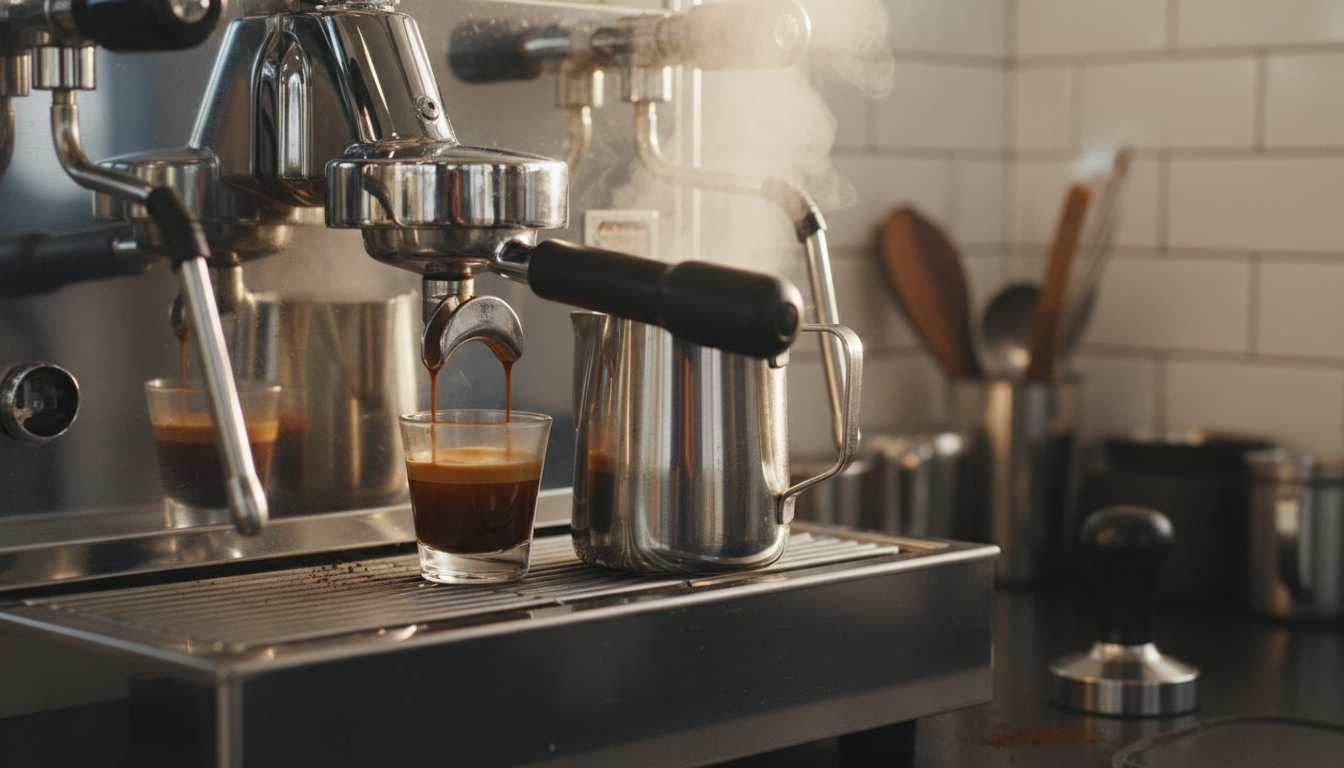
Making a great latte at home requires two things working well together: a machine that extracts a decent shot and a steam wand with enough power to texture milk properly. Most budget machines fail on one or both counts. These picks don’t.
What to actually look for
The shot matters, but the steam wand is where most latte-focused machines fall short. A panarello (the plastic sleeve that auto-froths) produces bubbly foam, not the microfoam you need for latte art or a silky mouthfeel. You want a commercial-style single-hole steam tip, or at minimum a wand you can remove the sleeve from.
Boiler size matters too. Single-boiler machines require you to wait between pulling a shot and steaming milk — usually 20–45 seconds while the boiler switches modes. Dual-boiler and heat-exchanger machines let you do both simultaneously. For daily latte making, that wait gets old fast.
Pump pressure should sit between 8–10 bar at the puck. Machines that advertise “15 bar” are citing pump capacity, not brew pressure — the actual pressure at extraction is usually lower and regulated by an OPV (over-pressure valve).
The best overall: Breville Barista Express
The Breville Barista Express is the default recommendation for a reason. It includes a conical burr grinder, a 54mm portafilter, and a steam wand that produces real microfoam once you learn the technique. The single boiler means a short wait between brewing and steaming, but it’s manageable — around 30 seconds.
The grinder isn’t exceptional, but it’s competent enough for most home users and removes the need to buy a separate unit. Pressure is pre-set at 9 bar via an internal OPV. Street price sits around $700, and it’s been refined over multiple generations.
If you want to skip the grinder and spend less, the Breville Bambino Plus at around $500 is the better focused buy. It has a 4-second heat-up time and a powerful auto-steam wand that actually produces decent microfoam — better than most auto-wands at this price.
Best for serious latte drinkers: Breville Dual Boiler
If you’re making multiple lattes daily or have a partner who also drinks milk drinks, the Breville Dual Boiler eliminates every workflow compromise. The steam boiler runs at full steam pressure while the brew boiler holds precise temperature independently. No waiting, no mode-switching.
It’s also PID-controlled on both boilers, so shot temperature is consistent. This matters more than most people realize — temperature swings of even 2–3°C noticeably affect espresso flavor. At around $1,500, it’s not cheap, but it’s the last home espresso machine most people will ever need to buy.
The steam wand here is notably powerful. If you’re learning latte art, this machine won’t be the bottleneck.
Best budget option: Gaggia Classic Pro
The Gaggia Classic Pro is the entry point into “real” espresso at around $450–$500. It runs a 9-bar OPV from the factory (newer versions), uses a 58mm commercial portafilter, and has a traditional steam wand.
The learning curve is steeper than the Breville options — there’s no pressure gauge, no auto-everything. But that also means it’s more upgradeable and repairable. It’s a popular first machine for people who want to actually learn espresso rather than automate it.
The steam power is adequate but not strong. It takes longer to texture milk than on the Breville Dual Boiler or even the Bambino Plus. For one or two lattes a day it’s fine; for volume it becomes annoying.
Semi-automatic vs. super-automatic for lattes
Super-automatic machines (think De’Longhi Magnifica Evo) grind, tamp, brew, and froth milk automatically. The convenience is real. The latte quality is not bad — but it’s not as good as a skilled pull from a semi-auto. The milk froth tends to be more foam than microfoam.
If someone in the household just wants a latte-style drink at the push of a button and has no interest in the craft, a super-auto makes sense. If you care about the quality ceiling, a semi-auto paired with a good grinder is the better long-term investment.
Grinder: don’t ignore it
A mediocre grinder ruins good equipment. The Barista Express’s built-in grinder is the floor. If you go with the Bambino Plus, Gaggia Classic Pro, or Breville Dual Boiler, pair it with at least a Baratza Encore ESP, which is purpose-built for espresso and costs around $200.
Pre-ground espresso is genuinely a last resort. Espresso goes stale within minutes of grinding. The grinder is half the shot.
Bottom line: For most people, the Breville Barista Express is the right starting point — grinder included, wand that works, price that’s reasonable. Step up to the Dual Boiler if volume and workflow matter. Go Gaggia Classic Pro if you want to learn on something more manual and don’t mind the smaller steam output.