Best Home Espresso Machines in 2026: Honest Picks
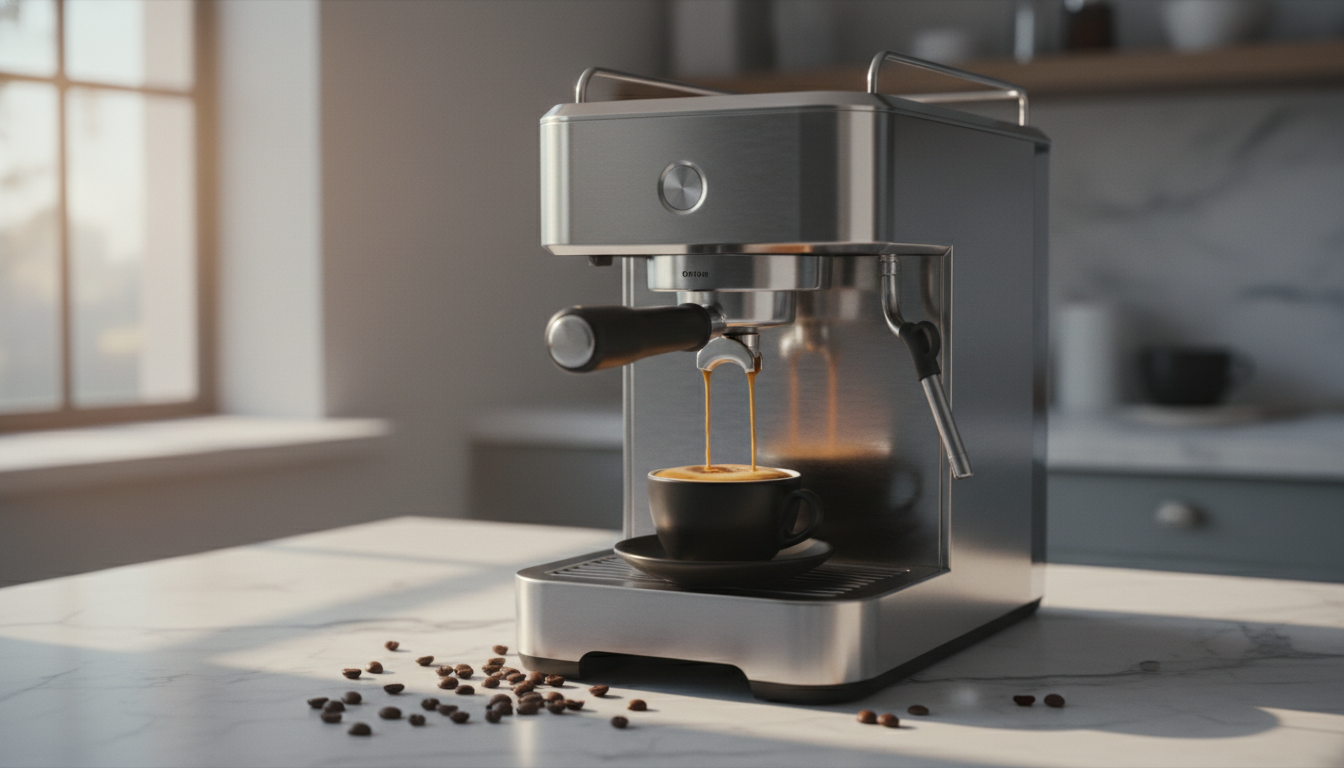
The right home espresso machine depends on how deep you want to go — milk drinks every morning, straight shots on weekends, or full-on dialing-in obsession. There’s no single best; there’s best for your budget, skill level, and counter space. These picks cover the realistic range.
The Budget Entry Point: Gaggia Classic Pro
Under $500, the Gaggia Classic Pro remains the most recommended starter machine for a reason. It has a commercial-style 58mm portafilter, a real solenoid valve, and enough build quality to last a decade with basic maintenance. The stock pressurestat runs a bit high for espresso, but it’s user-adjustable, and a massive mod community means you’re never stuck.
The steam wand is a single-hole tip from the factory — it works, but microfoam takes practice. Swap it for a Rancilio tip and it becomes genuinely capable. For anyone buying their first machine and willing to learn, the Classic Pro is still the call.
The “I Just Want Great Coffee” Pick: Breville Barista Express
The Breville Barista Express packages a conical burr grinder directly into the machine. That’s the appeal: one footprint, one power switch, espresso in a few minutes. The integrated grinder is decent — not exceptional, but good enough for the audience this machine targets.
Where it earns its price is consistency. Breville’s PID temperature control, pre-infusion, and 54mm tamper all work together to produce repeatable shots without much fiddling. If you’re buying for a household where not everyone wants to learn grind theory, this is the practical answer.
The Prosumer Step-Up: Rancilio Silvia Pro X
The Rancilio Silvia Pro X is a dual-boiler machine at a price point that used to be impossible — somewhere in the $1,100–$1,400 range depending on where you buy. Separate boilers for brew and steam means no heat-exchange wait time between pulling a shot and steaming milk. PID on both boilers. 58mm commercial group.
This is the machine for someone making two or three milk drinks in a row every morning and tired of managing temperature on a single-boiler setup. It’s also small enough to fit on a normal counter. The tradeoff: it needs a good external grinder to justify its potential. Pair it with something like the Eureka Mignon Specialita and you have a proper home setup.
The Lever Option: Flair 58+
Manual lever machines have a real following, and the Flair 58+ is where the format gets serious. No pump, no boiler — you heat water separately and apply pressure manually through the portafilter. Full pressure control through the pull. 58mm basket. Pressure gauge built in.
It makes outstanding espresso, often better than machines at twice the price, because you’re applying direct feedback every shot. The friction: it’s slower, requires attention, and you need a kettle capable of hitting precise temperatures (a gooseneck with temperature control is mandatory). For someone who enjoys the ritual, it’s deeply satisfying. For someone who wants coffee before they’re fully awake, it’s not.
Who Should Spend More: ECM Synchronika
At the high end of what makes sense for home use, the ECM Synchronika is a dual-boiler E61 group machine built to commercial tolerances. Flow control paddle, vibration pump with a quiet mode option, rotary pump upgrade available. Everything is repairable and the parts supply is excellent.
This is a ten-year machine if you maintain it. The case for spending this much at home: if you’re already buying high-quality beans and investing in a serious grinder, the machine becomes the limiting factor at some point. The Synchronika removes it.
How to Choose
These four questions narrow it down fast:
- Budget under $600? Gaggia Classic Pro if you want to learn, Barista Express if you want convenience.
- Making milk drinks daily for multiple people? Step up to a dual-boiler. The Silvia Pro X is the sensible entry point.
- Already own a great grinder? Don’t buy the Barista Express. Any of the other machines will outperform its integrated burrs.
- Enjoy process over speed? The Flair 58+ rewards attention and produces exceptional shots.
One thing that doesn’t get said enough: the grinder matters as much as the machine. A $300 machine with a $400 grinder beats a $700 machine with a $150 grinder, consistently. Budget accordingly.
Bottom line: For most people starting out, the Gaggia Classic Pro paired with a decent separate grinder is the highest-value path. Experienced home baristas ready to step up should look at the Rancilio Silvia Pro X before anything else.