Best Home Espresso Machines: Honest Reviews for 2026
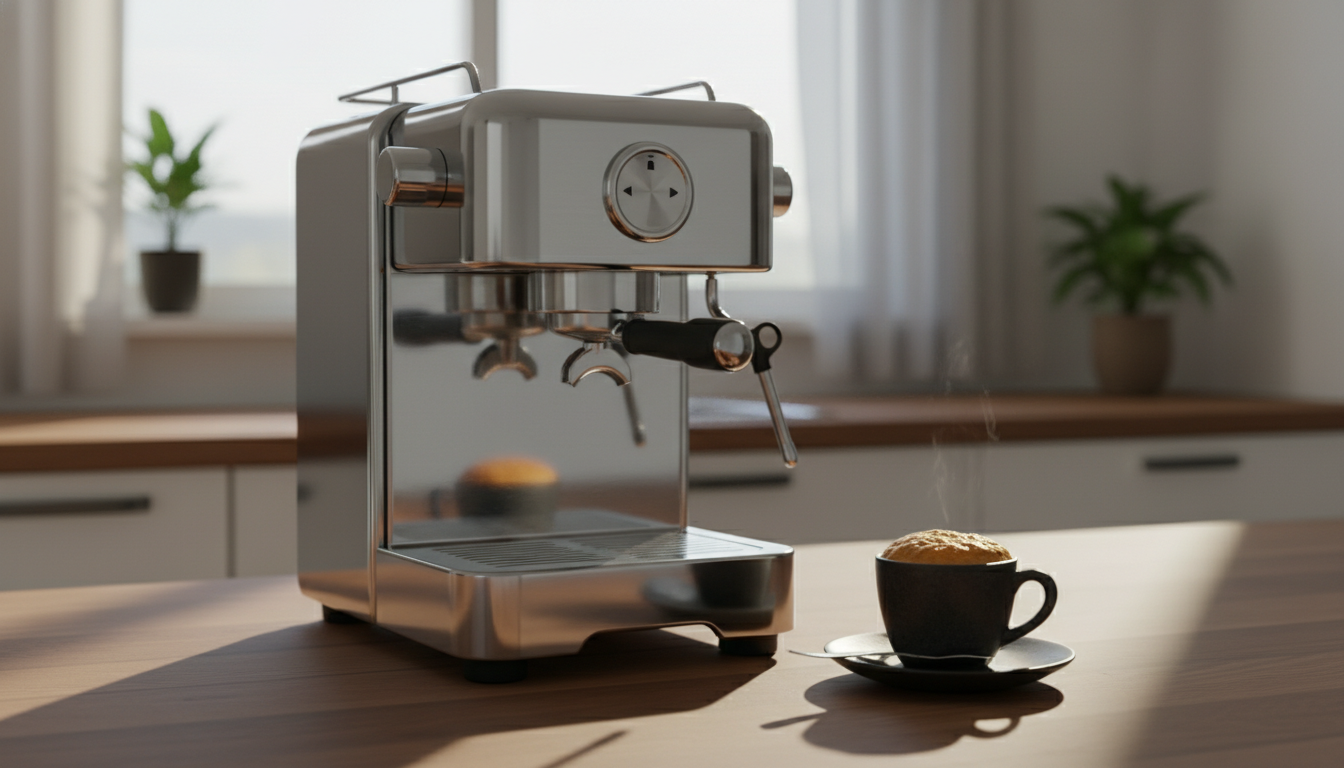
Searching for a home espresso machine usually means one of two things: you’re buying your first one and have no idea where to start, or you’ve already bought one that disappointed you. Either way, the market rewards people who know exactly which specs to care about and which ones are marketing noise. Here’s a direct look at the machines worth your money right now.
What separates a good home machine from a bad one
Pressure consistency and temperature stability are the two metrics that matter most. A machine that spikes from 7 to 11 bar mid-shot will pull sour, uneven espresso no matter how well you dial in your grind. A machine that can’t hold 93°C (±1°C) will do the same.
Boiler type is the shorthand signal here. Single-boiler machines with a thermocoil or thermoblock heat water quickly but give you less thermal mass to draw on. Heat exchanger (HEX) machines use one boiler for both steam and brew, which works well but requires a temperature “flush” before pulling shots. Dual-boiler machines run two completely separate boilers and are the most consistent option, but cost more to buy and run.
Build quality is also less optional than people think. Brass group heads, stainless steel boilers, and solid solenoid valves will outlast plastic components by years. Owner communities on Home-Barista and Reddit’s r/espresso are full of repair threads for machines that looked great in product photos.
Entry-level pick: Breville Bambino Plus
The Breville Bambino Plus sits around $500 and is the most recommended starter machine across every major espresso forum. It uses a thermojet heating system that reaches brew temperature in about 3 seconds, and the steam wand produces microfoam that can genuinely support latte art with some practice.
What buyers consistently flag: the 54mm portafilter limits your grinder options slightly (most prosumer grinders default to 58mm), and the pressurized basket included in the box hides grind problems rather than solving them. Swap to the included non-pressurized basket as soon as your grinder is dialed in.
For a first machine, it punches well above its price. The automatic steam feature is especially useful if you’re still learning milk technique.
Mid-range pick: Rancilio Silvia Pro X
The Rancilio Silvia Pro X runs around $1,200 and uses a dual-boiler setup in a compact footprint. That’s unusual at this price point, and it shows in shot consistency. The PID controller for both boilers is accessible through a front panel, so temperature adjustments don’t require diving into menus.
Community feedback over several years consistently notes that the steam boiler recovery is quick, the group head thermal stability is excellent, and the machine rewards good technique rather than compensating for it. This is a machine that will grow with your skill level.
The Silvia Pro X doesn’t have a ton of “smart” features, which is fine. The 58mm commercial portafilter means any prosumer grinder fits without adapters.
Prosumer pick: ECM Synchronika
At roughly $2,800, the ECM Synchronika is a dual-boiler E61 group head machine built in Germany. The E61 group provides enormous thermal mass and consistent pre-infusion, and the Synchronika’s chassis is heavy stainless steel that will last decades with basic maintenance.
Owner reports across Home-Barista threads converge on two things: build quality is exceptional, and temperature stability is among the best in its class. The rotary pump is whisper-quiet compared to vibratory alternatives.
This is not an impulse buy. But if you’re grinding with something like the Niche Zero and pulling shots seriously, the Synchronika is the kind of machine you stop wanting to upgrade.
The grinder problem (brief but important)
No espresso machine review is complete without saying this plainly: a $300 machine with a $500 grinder will outpull a $1,000 machine with a $100 grinder. Grind consistency, particle distribution, and stepless adjustment all affect the shot more directly than anything downstream.
If your budget is $1,000 total, consider splitting it 40/60 toward the grinder. The Baratza Sette 270Wi and the Niche Zero are the two most-recommended options under $700 in home espresso communities.
What to skip
Super-automatic machines (fully automatic bean-to-cup) are convenient but produce a narrower, lower-ceiling cup. The grinder burrs are typically small, the brew pressure is variable, and there’s almost no room to adjust variables manually. For people who just want a quick coffee without thinking about it, they work. For anyone who wants to improve their espresso, they’re a ceiling, not a floor.
Machines from generic brands on Amazon with no documented service network are a recurring regret in the r/espresso weekly thread. Parts availability, not just initial quality, determines whether a machine is worth the money.
Bottom line
The Breville Bambino Plus is the right starting point for most people. The Rancilio Silvia Pro X is the upgrade that makes sense once you’ve outgrown it. And the ECM Synchronika is for buyers who want to stop thinking about hardware entirely. In every case, budget generously for the grinder.